
 Čeština
 English
Ammonium acetate is a widely used reagent in molecular biology and chromatography. Suitable applications include the purification and precipitation of DNA and protein crystallization. Ammonium acetate is commonly used in HPLC and MS analysis of various compounds, such as oligosaccharides, proteins, and peptides.
Description
Ammonium acetate is a widely used reagent in molecular biology and chromatography. Suitable applications include the purification and precipitation of DNA and protein crystallization. Ammonium acetate is commonly used in HPLC and MS analysis of various compounds, such as oligosaccharides, proteins, and peptides.
Application
Used in chromatographic analysis of various compounds, such as oligos, proteins, and peptides
Molecular Formula: C2H7NO2
Molecular Weight: 77.08
Recommended Storage Condition: Room temperature
MCLAB’s 7M Guanidine-HCl Solution is a ready-to-use solution of guanidine hydrochloride, which can be easily diluted and pH-adjusted to any concentration below 7M.
Phosphate-buffered saline (PBS) is a balanced salt solution that is used for a variety of cell culture applications, such as washing cells before dissociation, transporting cells or tissue samples, diluting cells for counting, and preparing reagents. PBS is formulated without calcium and magnesium for rinsing chelators from the culture before cell dissociation.
DEPC-treated Water is deionized, high quality, molecular biology grade water.
D-(+)-Glucose is a common natural sugar involved in processes such as energy production, glycosylation, and formation of glycans that provide structure to cells. Glucose is involved in a detrimental process in cells called glycation. Glucose is used as a supplement for cell culture and in numerous cellular processes and molecular biology applications.
EDTA, 0.5 M, pH 8.0, is a sterile-filtered solution of 0.5 M EDTA in H2O treated with diethyl pyrocarbonate (DEPC).
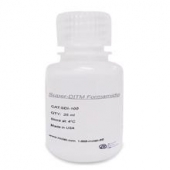
Super-DITM Formamid jest zalecanym buforem obciążającym dla wszystkich sekwenatorów ABI.
Brij-35 (30% Solution) is a nonionic polyoxyethylene surfactant that is most frequently used as a component of cell lysis buffers or as a surfactant in various HPLC applications.
TWEEN-40 is a class of emulsifiers used in some pharmaceutical and food preparations. It is often used in cosmetics to solubilize essential oils into water-based products. Polysorbates are oily liquid derived from PEGylated sorbitan (a derivative of sorbitol) esterified with fatty acids.
Reported use in all phases of detergent compounding and aqueous processing in the textile and paper industries, in industrial metal cleaners, acid cleaners, floor cleaners, detergent sanitizers and waterless hand cleaners.
The loading dye increases the density of the sample and adds colours to the sample, thereby simplifying the loading process. The solution contains dyes that, in a electric field, move toward the anode at predictable rates.
TWEEN 20 helps to prevent non-specific antibody binding in enzyme immunoassay as a washing agent (e.g. Western blots and ELISAs). In this major application, it is dissolved in Tris-Buffered Saline or Phosphate buffered saline at dilutions of 0.05% to 0.5% v/v.
Kanamycin Sulfate solution is an aminoglycoside antibiotic consisting of a six-membered aminocyclitol ring attached to aminosugar side chains through glycosidic bonds. Kanamycin Sulfate solution acts by inhibiting protein synthesis, and compromising translational fidelity in susceptible bacteria.
Sodium hydroxide is commonly used in the clandestine production of methamphetamine to change the pH of the solution to a basic pH so that it can become soluble in an organic solution.
TE Buffer is a common molecular biology buffer used for protection of DNA and RNA from degradation. The Tris buffering agent and EDTA metal chelating properties help to protect DNA and RNA.
TRITON X-114 is used in biochemical applications to solubilize and separate proteins due to its low cloud point (23 °C).
Linear acrylamide is widely used as one of the coprecipitants which are inert substances used to aid recovery of nucleic acids before alcohol precipitations.
Ammonium acetate is a widely used reagent in molecular biology and chromatography. Suitable applications include the purification and precipitation of DNA and protein crystallization. Ammonium acetate is commonly used in HPLC and MS analysis of various compounds, such as oligosaccharides, proteins, and peptides.