
 Čeština
 English
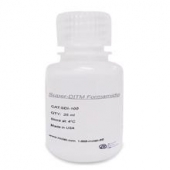
The β-galactosidase substrate X-Gal (5-bromo-4-chloro-3-indolyl-β-D-galactopyranoside) is a chromogenic stain for β-gal activity, and is commonly used to distinguish between recombinants and nonrecombinants by lacZ α-complementation with appropriate vectors and hosts.
Description
The β-galactosidase substrate X-Gal (5-bromo-4-chloro-3-indolyl-β-D-galactopyranoside) is a chromogenic stain for β-gal activity, and is commonly used to distinguish between recombinants and nonrecombinants by lacZ α-complementation with appropriate vectors and hosts. X-Gal Solution is provided as a convenient soution with 20 mg/ml concentrate in DMSO, ready for dilution to culture medium or appropriate buffers.
Synonym: 5-Bromo-4-chloro-3-indolyl β-D-galactoside, BCIG, X-Gal
Applications:
Blue/white colony screening assay (blue: non-recombinant colonies & white: recombinant colonies).
X-Gal staining of eukaryotic cells for the detection of β-galactosidase reporter gene expression.
Detection of β-galactosidase activity in various immunological and histochemical applications.
Formula: C14H15BrClNO6
Note
- Petri dish (9 cm diameter): Spread 40 µL on the surface
- Liquid LB agar: Use 2 µL for each 1 mL of liquid LB agar, add just before pouring plates (at about 50°C)
- Transfected eukaryotic cells: use 25 µL (1 mg) for each 1 mL of staining solution
Recommended Storage Condition: Stable up to 6 months when stored and protected from light at 4°C.
MCLAB's RNA Storage Buffer, with optimized reagents and pH value, provides better preservation and greater RNA stability for valuable RNA samples than the standard EDTA and TE Buffer or just water.
EDTA, 0.5 M, pH 8.0, is a sterile-filtered solution of 0.5 M EDTA in H2O treated with diethyl pyrocarbonate (DEPC).
Sodium hydroxide is commonly used in the clandestine production of methamphetamine to change the pH of the solution to a basic pH so that it can become soluble in an organic solution.
D-(+)-Glucose is a common natural sugar involved in processes such as energy production, glycosylation, and formation of glycans that provide structure to cells. Glucose is involved in a detrimental process in cells called glycation. Glucose is used as a supplement for cell culture and in numerous cellular processes and molecular biology applications.
CHAPS (3-[(3-cholamidopropyl)dimethylammonio]-1-propanesulfonate ) is a zwitterionic detergent used to solubilize proteins. It is used as a non-denaturing solvent in the process of protein purification and is especially useful in purifying membrane proteins.
5M solution of sodium chloride (NaCl) in high purity dH2O. Solution is 0.2 μm filtered and dispensed into durable, square Nalgene bottles.
Reported use in all phases of detergent compounding and aqueous processing in the textile and paper industries, in industrial metal cleaners, acid cleaners, floor cleaners, detergent sanitizers and waterless hand cleaners.
Super-DITM Formamid jest zalecanym buforem obciążającym dla wszystkich sekwenatorów ABI.
Bovine Serum Albumin (BSA) has many uses as a carrier protein and as a stabilizing agent in enzymatic reactions. MCLAB’s Ultrapure BSA is a "non-acetylated" BSA, pure enough to use when the integrity of DNA or RNA is essential. It has been tested for DNase, RNase, endonuclease, protease, peroxidase, and alkaline phosphatase activity, and assayed for fluorescence background.
TWEEN 20 helps to prevent non-specific antibody binding in enzyme immunoassay as a washing agent (e.g. Western blots and ELISAs). In this major application, it is dissolved in Tris-Buffered Saline or Phosphate buffered saline at dilutions of 0.05% to 0.5% v/v.
Ammonium Persulfate (APS) is an oxidizing agent that is used with TEMED to catalyze the polymerization of acrylamide and bisacrylamide to prepare polyacrylamide gels for electrophoresis.
MCLAB’s 7M Guanidine-HCl Solution is a ready-to-use solution of guanidine hydrochloride, which can be easily diluted and pH-adjusted to any concentration below 7M.
LB Agar plates contain 1.0% Tryptone, 0.5% yeast extract, 0.5% NaCl, 1.5% agar.
DEPC-treated Water is deionized, high quality, molecular biology grade water.
25% Triton X-100 is a commonly used detergent in laboratories.
MCLAB's high-purity 30% acrylamide/bis-acrylamide solution is a safer alternative to handling powdered acrylamide.
DEPC-treated Water is deionized, high quality, molecular biology grade water.
The β-galactosidase substrate X-Gal (5-bromo-4-chloro-3-indolyl-β-D-galactopyranoside) is a chromogenic stain for β-gal activity, and is commonly used to distinguish between recombinants and nonrecombinants by lacZ α-complementation with appropriate vectors and hosts.