
 Čeština
 English

Brij-35 (30% Solution) is a nonionic polyoxyethylene surfactant that is most frequently used as a component of cell lysis buffers or as a surfactant in various HPLC applications.
TRITON X-114 is used in biochemical applications to solubilize and separate proteins due to its low cloud point (23 °C).
SDS, sodium dodecyl sulfate is an anionic surfactant. SDS is commonly used in laboratory as a component of buffer for cell lysis, cell lysis during DNA extraction, and mostly in SDS-PAGE running buffer. Indeed, SDS is an anionic detergent applied to protein samples to linearize proteins and to impart a negative charge to linearized proteins.
IPTG (isopropyl-beta-D-thiogalactopyranoside) is a highly stable synthetic analog of lactose. It inactivates the lac repressor and induces synthesis of beta-galactosidase, an enzyme that promotes lactose utilization. IPTG is used to induce expression of cloned genes under the control of the lac operon.
Low concentration solutions of DNA are prone to DNA degradation or other loss. It is critical that optimal methods are employed for DNA suspension and long-term storage.
Ammonium Persulfate (APS) is an oxidizing agent that is used with TEMED to catalyze the polymerization of acrylamide and bisacrylamide to prepare polyacrylamide gels for electrophoresis.
Acetylated BSA is used as a carrier protein and an enzyme stabilizer in which the absence of contaminants such as nucleases and proteases is vital. The acetylation process inactivates any trace of active nuclease activity. While the acetylation process does change BSA's binding characteristics and makes it inhibitory in PCR reactions, it is normally added to restriction digests.
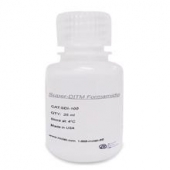
Super-DITM Formamid jest zalecanym buforem obciążającym dla wszystkich sekwenatorów ABI.
Ammonium acetate is a widely used reagent in molecular biology and chromatography. Suitable applications include the purification and precipitation of DNA and protein crystallization. Ammonium acetate is commonly used in HPLC and MS analysis of various compounds, such as oligosaccharides, proteins, and peptides.
EDTA, 0.5 M, pH 8.0, is a sterile-filtered solution of 0.5 M EDTA in H2O treated with diethyl pyrocarbonate (DEPC).
A routine use of agarose is ideal for daily analysis of nucleic acids by gel electrophoresis or blotting (Northern or Southern) and is also suitable for protein applications such as Ouchterlony and radial immunodiffusion (RID). It has low ethidium bromide and SYBR Green background staining.