
 Čeština
 English

A routine use of agarose is ideal for daily analysis of nucleic acids by gel electrophoresis or blotting (Northern or Southern) and is also suitable for protein applications such as Ouchterlony and radial immunodiffusion (RID). It has low ethidium bromide and SYBR Green background staining.
Description
A routine use of agarose is ideal for daily analysis of nucleic acids by gel electrophoresis or blotting (Northern or Southern) and is also suitable for protein applications such as Ouchterlony and radial immunodiffusion (RID). It has low ethidium bromide and SYBR Green background staining.
Applications
Transition temp
Gel point 36 °C (± 1.5 °C)

Reported use in all phases of detergent compounding and aqueous processing in the textile and paper industries, in industrial metal cleaners, acid cleaners, floor cleaners, detergent sanitizers and waterless hand cleaners.
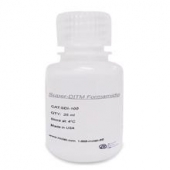
Super-DITM Formamid jest zalecanym buforem obciążającym dla wszystkich sekwenatorów ABI.
LB Agar plates contain 1.0% Tryptone, 0.5% yeast extract, 0.5% NaCl, 1.5% agar.
TAE buffer is the most commonly used buffer for DNA agarose gel electrophoresis but is also used for non-denaturing RNA agarose gel electrophoresis1. Double-stranded DNA tends to run faster in TAE than in other buffers but can also become exhausted during extended electrophoresis.
MCLAB's RNA Storage Buffer, with optimized reagents and pH value, provides better preservation and greater RNA stability for valuable RNA samples than the standard EDTA and TE Buffer or just water.
5M solution of sodium chloride (NaCl) in high purity dH2O. Solution is 0.2 μm filtered and dispensed into durable, square Nalgene bottles.
TRITON X-114 is used in biochemical applications to solubilize and separate proteins due to its low cloud point (23 °C).
CHAPS (3-[(3-cholamidopropyl)dimethylammonio]-1-propanesulfonate ) is a zwitterionic detergent used to solubilize proteins. It is used as a non-denaturing solvent in the process of protein purification and is especially useful in purifying membrane proteins.
The β-galactosidase substrate X-Gal (5-bromo-4-chloro-3-indolyl-β-D-galactopyranoside) is a chromogenic stain for β-gal activity, and is commonly used to distinguish between recombinants and nonrecombinants by lacZ α-complementation with appropriate vectors and hosts.
Ammonium Sulfate. (NH4)2SO4 is an inorganic salt with a number of commercial uses.
MCLAB's high-purity 30% acrylamide/bis-acrylamide solution is a safer alternative to handling powdered acrylamide.
EDTA, 0.5 M, pH 8.0, is a sterile-filtered solution of 0.5 M EDTA in H2O treated with diethyl pyrocarbonate (DEPC).
Bovine Serum Albumin (BSA) has many uses as a carrier protein and as a stabilizing agent in enzymatic reactions. MCLAB’s Ultrapure BSA is a "non-acetylated" BSA, pure enough to use when the integrity of DNA or RNA is essential. It has been tested for DNase, RNase, endonuclease, protease, peroxidase, and alkaline phosphatase activity, and assayed for fluorescence background.
Phosphate-buffered saline (PBS) is a balanced salt solution that is used for a variety of cell culture applications, such as washing cells before dissociation, transporting cells or tissue samples, diluting cells for counting, and preparing reagents. PBS is formulated without calcium and magnesium for rinsing chelators from the culture before cell dissociation.
Contains 100% active components and is a mixture of organic non - silicone polypropylene based polyether dispersions. Can be sterilized repeatedly.
Low concentration solutions of DNA are prone to DNA degradation or other loss. It is critical that optimal methods are employed for DNA suspension and long-term storage.
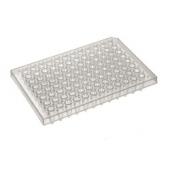
96 dołkowa płytka do PCR, niska boczna ramka (ang. semi skirted), z kodem kreskowym
A routine use of agarose is ideal for daily analysis of nucleic acids by gel electrophoresis or blotting (Northern or Southern) and is also suitable for protein applications such as Ouchterlony and radial immunodiffusion (RID). It has low ethidium bromide and SYBR Green background staining.