

 Čeština
 English
Kategorie produktów
Podkategorie



RNase A (Ribonuclease A)
High purity
Rapid and efficient RNA removal
Stable

Sticky End Ligation Master Mix
Ready-to-use
Fast and easy ligation
Versatile use

Rapid Ligation Master Mix
Ready-to-use
Fast and easy ligation
Suitable even for challenging ligations

Blunt/TA Ligation Master Mix
Ready-to-use
Fast and easy ligation
Suitable even for challenging ligations

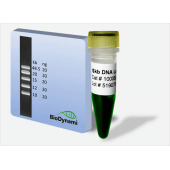
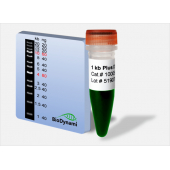
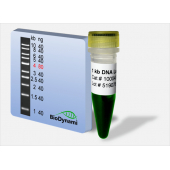
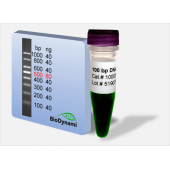
1 kb Plus DNA Ladder
Ready-to-load format
Versatile use


Betaine 5M (Molecular Biology Grade)
Molecular weight: 117.15 g/mol
Concentration: 5 M
Nuclease activity: DNase-free, RNase-free

One-Step RT-PCR Kit (Probe-Based)
Fluorescent probe
High sensitivity and specificity
Universal compatibility

One-Step RT-PCR Kit (Dye-Based)
Fluorescent dye
High sensitivity and specificity
Universal compatibility

One-Step RT-PCR Kit
Successful and specific amplification,
Reliability and accuracy,
Easy to use

2X qPCR Master Mix (Probe-Based)
Fluorescent probes
High sensitivity
Universal application

2X qPCR Master Mix (Dye-Based)
ROX dye
High sensitivity
Universal application

2X PCR Master Mix
Maximum amplicon length up to 5 kb
Elongation rate 1 kb/min at 72°C
Universal application





ADS™ Exo-Alp PCR Cleanup Mix
Fast and simple to use
Minimal DNA loss
Direct use of the product

ADS™ phi29 RCA DNA Amplification Kit
Fast and efficient DNA amplification
Direct use for sequencing
Mutant screening