
 Čeština
 English
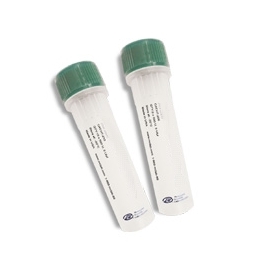
Description:
T4 replication helicase (gp41) and polymerase (gp43) can be assembled onto a loading site located near the end of a long double-stranded DNA template in the presence of a macro-molecular crowding agent. This coupled “two-protein” system can carry out ATP-dependent strand displacement DNA synthesis at physiological rates (400 to 500 bp per sec), with high processivity in the absence of other T4 DNA replication proteins.
Source:
An enzyme from the gene of the bacteriophage T4 phage.
Application:
DNA helicase is an enzyme that aids in DNA synthesis by 'unzipping' the two strands of a DNA helix so that DNA polymerase can access the DNA to add nucleotides and effect copying.
Supplied In:
10 mM Tris-HCl
50 mM KCl
1 mM DTT
0.1 mM EDTA
50% Glycerol
pH 7.4 @ 25°C
Recommended Storage Condition: -20°C
Streptavidin is a non-glycosylated, 52.8 kDa, tetrameric bacterial protein isolated from Streptomyces avidinii with a very high affinity for biotin. Streptavidin-biotin bond is the strongest known non-covalent interaction with Kd ~10-15 M. Because streptavidin lacks any carbohydrate modification and has a near-neutral pI, it has the advantage of much lower nonspecific binding than avidin.
Human Brain-Derived Neurotrophic Factor (BDNF) is a member of the Nerve growth factor family. BDNF is induced by cortical neurons, and is necessary for survival of striatal neurons in the brain. During development, BDNF promotes the survival and differentiation of selected neuronal populations of the peripheral and central nervous systems.
Botulinum neurotoxin type A is one of the seven serotypes of Botulinum Neurotoxins (BoNTs) produced by various strains of Clostridium botulinum.
Biotin-protein ligase (EC 6.3.4.15) activates biotin to form biotinyl 5' adenylate and transfers the biotin to biotin-accepting proteins. It also functions as a biotin operon repressor.
ATP-dependent 3′ to 5′ helicase
expressed in E. coli
ApoA1 (Apolipoprotein A1) is synthesized in the liver and small intestine, and is the major protein component of high density lipoprotein (HDL) in the plasma. ApoA1 has a unique ability to capture and solubilize free cholesterol, and promotes cholesterol efflux from tissues to the liver for excretion. The process, called reverse cholesterol transport, is thought to inhibit atherogenesis.
Human Nicotinamide Phosphoribosyltransferase (NAMPT) catalyzes the condensation of nicotinamide with 5-phosphoribosyl-1-pyrophosphate to yield nicotinamide mononucleotide, one step in the biosynthesis of nicotinamide adenine dinucleotide.
10 μg, 100 ug/ml