
 Čeština
 Polski
Description:
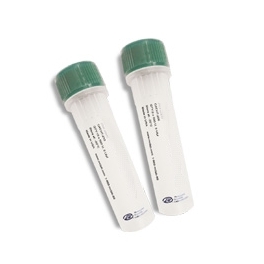
Poly(A) Polymerase catalyzes the template independent of the addition of AMP from ATP to the 3'-end of RNA. Poly(A) works more competently than E. coli poly(A) polymerase for RNA oligonucleotide-labeling and poly(A) tailing. Less incubation time is required for the yeast enzyme. This enzyme labels both long and short substrates. Poly(A) polymerase preferentially labels longer RNA-molecules whereas short RNA-molecules are labeled more efficiently by T4 RNA ligase. The reaction requires Mn2+ or Mg2+, ATP as substrates, and any RNA containing 3'-hydroxyl termini as primers. Longer RNA molecules are somewhat better primers than short oligomers. Substitution of cordycepin 5'-triphosphate (3'-dATP) for ATP results in the addition of a single 3'-dA residue to the ends of the RNA, a useful technique for labeling RNA at the 3'-end.
Application:
- Labeling the 3'-ends of RNA with ATP or cordycepin
- Poly(A) tailing of RNA for cloning or affinity purification
- Preparing a priming site for cDNA synthesis using oligo-dT
- Enhancing translation of RNA transferred into eukaryotic cells
Source:
An E. coli strain that carries the cloned Poly(A) Polymerase gene from (Saccharomyces cerevisiae).
Specific Activity: >20,000 U/mg
Unit Definition:
One unit is the amount of enzyme which incorporates 1 pmol AMP into acid-insoluble material at 37°C in 1 min.
5x Poly(A) Polymerase Reaction Buffer:
100 mM Tris-HCl, pH 7.0, 3.0 mM MnCl2, 0.1 mM EDTA, 1 mM DTT, 500 µg/ml Acetylated BSA, 50% Glycerol.
Storage Buffer:
20 mM Tris-HCl (pH 8.0), 50 mM KCl, 0.5 mM DTT, 50% Glycerol.
Assay Conditions:
1x Poly(A) Polymerase Reaction Buffer, 1 mM rATP and 500 ng 5'-FAM labeled poly A 20-mer RNA in a 20 µl reaction. After incubation at 37°C for 10 min, acid insoluble radioactivity is determined either by gel electrophoresis or with an automated capillary DNA sequencer. In this assay 5 units of enzyme add approximatley 60 to 80 adenosines to the RNA primer. In these conditons 20 units of enzyme will deplete the rATP.
Heat Inactivation: 65°C for 20 minutes
Recommended Storage Condition: -20ºC
References:
1. Sippel, A. E. (1973) Eur. J. Biochem. 37, 31-40.
2. Edmonds, M. (1982) in The Enzymes, 3rd edition, ed. P. D. Boyer (Academic Press, New York) 15, 217-244.
3. Gething, M. J., Bye, J., Skehel, J. and Waterfield, M. (1980) Nature 287, 301-306.
4. Sano, H. and Feix, G. (1976) Eur. J. Biochem. 71, 577-583.

synthesis at higher temperatures
reduced RNase H activity
easy to use
accuracy, yield, and sensitivity
high throughput
maximum sample volume
120,000 units, 600 U/ul