
 Čeština
 English
Linear acrylamide is widely used as one of the coprecipitants which are inert substances used to aid recovery of nucleic acids before alcohol precipitations.
Description:
Linear acrylamide is widely used as one of the coprecipitants which are inert substances used to aid recovery of nucleic acids before alcohol precipitations. It is chemically synthesized and is the most ideal for use upstream of RT-PCR without biological material contaminating. It has been shown to be able to separate picogram amounts of DNA fragments larger than 20 base pairs from unincorporated nucleotides and from most of the oligonucleotide primers.
The Coprecipitant Linear Acrylamide is not interfering with A260/280 readings.
Applications:
Recommended Storage Condition: -20°C
A routine use of agarose is ideal for daily analysis of nucleic acids by gel electrophoresis or blotting (Northern or Southern) and is also suitable for protein applications such as Ouchterlony and radial immunodiffusion (RID). It has low ethidium bromide and SYBR Green background staining.
Phosphate-buffered saline (PBS) is a balanced salt solution that is used for a variety of cell culture applications, such as washing cells before dissociation, transporting cells or tissue samples, diluting cells for counting, and preparing reagents. PBS is formulated without calcium and magnesium for rinsing chelators from the culture before cell dissociation.
DEPC-treated Water is deionized, high quality, molecular biology grade water.
CHAPSO (3-[(3-cholamidopropyl)dimethylammonio]-2-hydroxy-1-propanesulfonate) is a zwitterionic detergent used to solubilize proteins. Due to its low light absorbance in the ultraviolet region of the electromagnetic spectrum, CHAPSO is useful for researchers monitoring ongoing chemical reactions or protein-protein binding with UV/Vis spectroscopy.
TE Buffer is a common molecular biology buffer used for protection of DNA and RNA from degradation. The Tris buffering agent and EDTA metal chelating properties help to protect DNA and RNA.
D-(+)-Glucose is a common natural sugar involved in processes such as energy production, glycosylation, and formation of glycans that provide structure to cells. Glucose is involved in a detrimental process in cells called glycation. Glucose is used as a supplement for cell culture and in numerous cellular processes and molecular biology applications.
Ammonium Sulfate. (NH4)2SO4 is an inorganic salt with a number of commercial uses.
CHAPS (3-[(3-cholamidopropyl)dimethylammonio]-1-propanesulfonate ) is a zwitterionic detergent used to solubilize proteins. It is used as a non-denaturing solvent in the process of protein purification and is especially useful in purifying membrane proteins.
TWEEN-40 is a class of emulsifiers used in some pharmaceutical and food preparations. It is often used in cosmetics to solubilize essential oils into water-based products. Polysorbates are oily liquid derived from PEGylated sorbitan (a derivative of sorbitol) esterified with fatty acids.
IPTG (isopropyl-beta-D-thiogalactopyranoside) is a highly stable synthetic analog of lactose. It inactivates the lac repressor and induces synthesis of beta-galactosidase, an enzyme that promotes lactose utilization. IPTG is used to induce expression of cloned genes under the control of the lac operon.
Contains 100% active components and is a mixture of organic non - silicone polypropylene based polyether dispersions. Can be sterilized repeatedly.
Ammonium acetate is a widely used reagent in molecular biology and chromatography. Suitable applications include the purification and precipitation of DNA and protein crystallization. Ammonium acetate is commonly used in HPLC and MS analysis of various compounds, such as oligosaccharides, proteins, and peptides.
EDTA, 0.5 M, pH 8.0, is a sterile-filtered solution of 0.5 M EDTA in H2O treated with diethyl pyrocarbonate (DEPC).
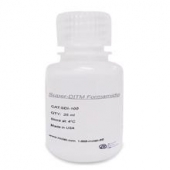
Super-DITM Formamid jest zalecanym buforem obciążającym dla wszystkich sekwenatorów ABI.
TWEEN-40 is a class of emulsifiers used in some pharmaceutical and food preparations. It is often used in cosmetics to solubilize essential oils into water-based products. Polysorbates are oily liquid derived from PEGylated sorbitan (a derivative of sorbitol) esterified with fatty acids.
Linear acrylamide is widely used as one of the coprecipitants which are inert substances used to aid recovery of nucleic acids before alcohol precipitations.