
 Čeština
 English
SDS, sodium dodecyl sulfate is an anionic surfactant. SDS is commonly used in laboratory as a component of buffer for cell lysis, cell lysis during DNA extraction, and mostly in SDS-PAGE running buffer. Indeed, SDS is an anionic detergent applied to protein samples to linearize proteins and to impart a negative charge to linearized proteins.
Description
SDS, sodium dodecyl sulfate is an anionic surfactant. SDS is commonly used in laboratory as a component of buffer for cell lysis, cell lysis during DNA extraction, and mostly in SDS-PAGE running buffer. Indeed, SDS is an anionic detergent applied to protein samples to linearize proteins and to impart a negative charge to linearized proteins.
Recommended Storage Condition: Room temperature
Linear acrylamide is widely used as one of the coprecipitants which are inert substances used to aid recovery of nucleic acids before alcohol precipitations.
CHAPS (3-[(3-cholamidopropyl)dimethylammonio]-1-propanesulfonate ) is a zwitterionic detergent used to solubilize proteins. It is used as a non-denaturing solvent in the process of protein purification and is especially useful in purifying membrane proteins.
TE Buffer is a common molecular biology buffer used for protection of DNA and RNA from degradation. The Tris buffering agent and EDTA metal chelating properties help to protect DNA and RNA.
TRITON X-114 is used in biochemical applications to solubilize and separate proteins due to its low cloud point (23 °C).
Contains 100% active components and is a mixture of organic non - silicone polypropylene based polyether dispersions. Can be sterilized repeatedly.
Tris Buffered Saline (TBS) is an isotonic, non-toxic buffer used in some biomedical techniques to maintain pH within a relatively narrow range. TBS can shift pH relatively drastically as temperature changes, with the pKa declining approximately 0.03 units per degree Celsius rise in temperature.
TWEEN-40 is a class of emulsifiers used in some pharmaceutical and food preparations. It is often used in cosmetics to solubilize essential oils into water-based products. Polysorbates are oily liquid derived from PEGylated sorbitan (a derivative of sorbitol) esterified with fatty acids.
The β-galactosidase substrate X-Gal (5-bromo-4-chloro-3-indolyl-β-D-galactopyranoside) is a chromogenic stain for β-gal activity, and is commonly used to distinguish between recombinants and nonrecombinants by lacZ α-complementation with appropriate vectors and hosts.
D-(+)-Glucose is a common natural sugar involved in processes such as energy production, glycosylation, and formation of glycans that provide structure to cells. Glucose is involved in a detrimental process in cells called glycation. Glucose is used as a supplement for cell culture and in numerous cellular processes and molecular biology applications.
Ammonium Sulfate. (NH4)2SO4 is an inorganic salt with a number of commercial uses.
Kanamycin Sulfate solution is an aminoglycoside antibiotic consisting of a six-membered aminocyclitol ring attached to aminosugar side chains through glycosidic bonds. Kanamycin Sulfate solution acts by inhibiting protein synthesis, and compromising translational fidelity in susceptible bacteria.
MCLAB’s 7M Guanidine-HCl Solution is a ready-to-use solution of guanidine hydrochloride, which can be easily diluted and pH-adjusted to any concentration below 7M.
Ammonium Persulfate (APS) is an oxidizing agent that is used with TEMED to catalyze the polymerization of acrylamide and bisacrylamide to prepare polyacrylamide gels for electrophoresis.
LB Agar plates contain 1.0% Tryptone, 0.5% yeast extract, 0.5% NaCl, 1.5% agar.
A routine use of agarose is ideal for daily analysis of nucleic acids by gel electrophoresis or blotting (Northern or Southern) and is also suitable for protein applications such as Ouchterlony and radial immunodiffusion (RID). It has low ethidium bromide and SYBR Green background staining.
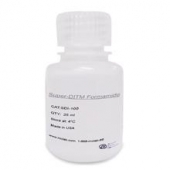
Super-DITM Formamid jest zalecanym buforem obciążającym dla wszystkich sekwenatorów ABI.
Kanamycin Sulfate solution is an aminoglycoside antibiotic consisting of a six-membered aminocyclitol ring attached to aminosugar side chains through glycosidic bonds. Kanamycin Sulfate solution acts by inhibiting protein synthesis, and compromising translational fidelity in susceptible bacteria.
The β-galactosidase substrate X-Gal (5-bromo-4-chloro-3-indolyl-β-D-galactopyranoside) is a chromogenic stain for β-gal activity, and is commonly used to distinguish between recombinants and nonrecombinants by lacZ α-complementation with appropriate vectors and hosts.
EDTA, 0.5 M, pH 8.0, is a sterile-filtered solution of 0.5 M EDTA in H2O treated with diethyl pyrocarbonate (DEPC).
IPTG (isopropyl-beta-D-thiogalactopyranoside) is a highly stable synthetic analog of lactose. It inactivates the lac repressor and induces synthesis of beta-galactosidase, an enzyme that promotes lactose utilization. IPTG is used to induce expression of cloned genes under the control of the lac operon.
TE Buffer is a common molecular biology buffer used for protection of DNA and RNA from degradation. The Tris buffering agent and EDTA metal chelating properties help to protect DNA and RNA.
Contains 100% active components and is a mixture of organic non - silicone polypropylene based polyether dispersions. Can be sterilized repeatedly.
Brij-35 (30% Solution) is a nonionic polyoxyethylene surfactant that is most frequently used as a component of cell lysis buffers or as a surfactant in various HPLC applications.
SDS, sodium dodecyl sulfate is an anionic surfactant. SDS is commonly used in laboratory as a component of buffer for cell lysis, cell lysis during DNA extraction, and mostly in SDS-PAGE running buffer. Indeed, SDS is an anionic detergent applied to protein samples to linearize proteins and to impart a negative charge to linearized proteins.