
 Čeština
 Polski

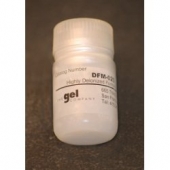
CHAPSO (3-[(3-cholamidopropyl)dimethylammonio]-2-hydroxy-1-propanesulfonate) is a zwitterionic detergent used to solubilize proteins. Due to its low light absorbance in the ultraviolet region of the electromagnetic spectrum, CHAPSO is useful for researchers monitoring ongoing chemical reactions or protein-protein binding with UV/Vis spectroscopy.
Description
CHAPSO (3-[(3-cholamidopropyl)dimethylammonio]-2-hydroxy-1-propanesulfonate) is a zwitterionic detergent used to solubilize proteins. Due to its low light absorbance in the ultraviolet region of the electromagnetic spectrum, CHAPSO is useful for researchers monitoring ongoing chemical reactions or protein-protein binding with UV/Vis spectroscopy.
Applications
Solublizies proteins in non-denaturing state
Helps monitor membrane proteins due to its low background absorbance in the UV region
Molecular Formula
C32H58N2O8S
Melting point (Mp)
184-186°C

Sodium hydroxide is commonly used in the clandestine production of methamphetamine to change the pH of the solution to a basic pH so that it can become soluble in an organic solution.
MCLAB’s 7M Guanidine-HCl Solution is a ready-to-use solution of guanidine hydrochloride, which can be easily diluted and pH-adjusted to any concentration below 7M.
MCLAB's RNA Storage Buffer, with optimized reagents and pH value, provides better preservation and greater RNA stability for valuable RNA samples than the standard EDTA and TE Buffer or just water.
Acetylated BSA is used as a carrier protein and an enzyme stabilizer in which the absence of contaminants such as nucleases and proteases is vital. The acetylation process inactivates any trace of active nuclease activity. While the acetylation process does change BSA's binding characteristics and makes it inhibitory in PCR reactions, it is normally added to restriction digests.
IPTG (isopropyl-beta-D-thiogalactopyranoside) is a highly stable synthetic analog of lactose. It inactivates the lac repressor and induces synthesis of beta-galactosidase, an enzyme that promotes lactose utilization. IPTG is used to induce expression of cloned genes under the control of the lac operon.
Brij-35 (30% Solution) is a nonionic polyoxyethylene surfactant that is most frequently used as a component of cell lysis buffers or as a surfactant in various HPLC applications.
TRITON X-114 is used in biochemical applications to solubilize and separate proteins due to its low cloud point (23 °C).
TAE buffer is the most commonly used buffer for DNA agarose gel electrophoresis but is also used for non-denaturing RNA agarose gel electrophoresis1. Double-stranded DNA tends to run faster in TAE than in other buffers but can also become exhausted during extended electrophoresis.
SDS, sodium dodecyl sulfate is an anionic surfactant. SDS is commonly used in laboratory as a component of buffer for cell lysis, cell lysis during DNA extraction, and mostly in SDS-PAGE running buffer. Indeed, SDS is an anionic detergent applied to protein samples to linearize proteins and to impart a negative charge to linearized proteins.
TWEEN 20 helps to prevent non-specific antibody binding in enzyme immunoassay as a washing agent (e.g. Western blots and ELISAs). In this major application, it is dissolved in Tris-Buffered Saline or Phosphate buffered saline at dilutions of 0.05% to 0.5% v/v.
The β-galactosidase substrate X-Gal (5-bromo-4-chloro-3-indolyl-β-D-galactopyranoside) is a chromogenic stain for β-gal activity, and is commonly used to distinguish between recombinants and nonrecombinants by lacZ α-complementation with appropriate vectors and hosts.
The loading dye increases the density of the sample and adds colours to the sample, thereby simplifying the loading process. The solution contains dyes that, in a electric field, move toward the anode at predictable rates.
Tris Buffered Saline (TBS) is an isotonic, non-toxic buffer used in some biomedical techniques to maintain pH within a relatively narrow range. TBS can shift pH relatively drastically as temperature changes, with the pKa declining approximately 0.03 units per degree Celsius rise in temperature.
CHAPS (3-[(3-cholamidopropyl)dimethylammonio]-1-propanesulfonate ) is a zwitterionic detergent used to solubilize proteins. It is used as a non-denaturing solvent in the process of protein purification and is especially useful in purifying membrane proteins.
CHAPSO (3-[(3-cholamidopropyl)dimethylammonio]-2-hydroxy-1-propanesulfonate) is a zwitterionic detergent used to solubilize proteins. Due to its low light absorbance in the ultraviolet region of the electromagnetic spectrum, CHAPSO is useful for researchers monitoring ongoing chemical reactions or protein-protein binding with UV/Vis spectroscopy.