
 Čeština
 Polski

TAE buffer is the most commonly used buffer for DNA agarose gel electrophoresis but is also used for non-denaturing RNA agarose gel electrophoresis1. Double-stranded DNA tends to run faster in TAE than in other buffers but can also become exhausted during extended electrophoresis.
Description
TAE buffer is the most commonly used buffer for DNA agarose gel electrophoresis but is also used for non-denaturing RNA agarose gel electrophoresis1. Double-stranded DNA tends to run faster in TAE than in other buffers but can also become exhausted during extended electrophoresis. Dilution of the concentrated TAE buffer produces a 1× TAE buffer with 40 mM Tris-acetate and 1 mM EDTA, pH 8.3. The 1× TAE buffer is used both in the agarose gel and as a running buffer.
Application
Casting and running buffer for agarose gel electrophoresis of nucleic acids.
Notes
0.4M Tris base, 0.4M acetate, 10mM EDTA, pH 8.0.
Recommended Storage Condition: Room temperature

Buffer EB is the elution buffer used in many Qiagen kits, e.g. PCR, Gel Extraction, Nucleotide Removal Kits, MinElute Kits and the QIAprep Miniprep Kits for DNA cleanup or small-scale plasmid purification. The purified DNA can also be eluted in TE (10 mM Tris-Cl, 1 mM EDTA, pH 8.0), but the EDTA may inhibit certain subsequent enzymatic reactions.
EDTA, 0.5 M, pH 8.0, is a sterile-filtered solution of 0.5 M EDTA in H2O treated with diethyl pyrocarbonate (DEPC).
Sodium hydroxide is commonly used in the clandestine production of methamphetamine to change the pH of the solution to a basic pH so that it can become soluble in an organic solution.
MCLAB's RNA Storage Buffer, with optimized reagents and pH value, provides better preservation and greater RNA stability for valuable RNA samples than the standard EDTA and TE Buffer or just water.
Contains 100% active components and is a mixture of organic non - silicone polypropylene based polyether dispersions. Can be sterilized repeatedly.
IPTG (isopropyl-beta-D-thiogalactopyranoside) is a highly stable synthetic analog of lactose. It inactivates the lac repressor and induces synthesis of beta-galactosidase, an enzyme that promotes lactose utilization. IPTG is used to induce expression of cloned genes under the control of the lac operon.
D-(+)-Glucose is a common natural sugar involved in processes such as energy production, glycosylation, and formation of glycans that provide structure to cells. Glucose is involved in a detrimental process in cells called glycation. Glucose is used as a supplement for cell culture and in numerous cellular processes and molecular biology applications.
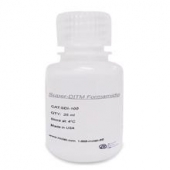
The Super-DITM Formamide is the recommended sample loading buffer for all ABI sequencers.
Phosphate-buffered saline (PBS) is a balanced salt solution that is used for a variety of cell culture applications, such as washing cells before dissociation, transporting cells or tissue samples, diluting cells for counting, and preparing reagents. PBS is formulated without calcium and magnesium for rinsing chelators from the culture before cell dissociation.
CHAPS (3-[(3-cholamidopropyl)dimethylammonio]-1-propanesulfonate ) is a zwitterionic detergent used to solubilize proteins. It is used as a non-denaturing solvent in the process of protein purification and is especially useful in purifying membrane proteins.
DEPC-treated Water is deionized, high quality, molecular biology grade water.
TWEEN 20 helps to prevent non-specific antibody binding in enzyme immunoassay as a washing agent (e.g. Western blots and ELISAs). In this major application, it is dissolved in Tris-Buffered Saline or Phosphate buffered saline at dilutions of 0.05% to 0.5% v/v.
Linear acrylamide is widely used as one of the coprecipitants which are inert substances used to aid recovery of nucleic acids before alcohol precipitations.
TAE buffer is the most commonly used buffer for DNA agarose gel electrophoresis but is also used for non-denaturing RNA agarose gel electrophoresis1. Double-stranded DNA tends to run faster in TAE than in other buffers but can also become exhausted during extended electrophoresis.