
 Čeština
 Polski
Description:
Prokaryotic Argonaute (pAGO) is the key protein in the host defense system by mediating nucleic acid molecules. As the DNA-guided endonuclease from hyperthermophilic archaeon Pyrococcus furiosus, pfAGO protein targets cognate DNA without the requirements of a PAM (protospacer adjacent motif) or PFS (protospacer flanking site) on the target sequence, which largely extends the application in selection of available target DNA sequence. Besides, compared to CRISPR/Cas systems, PfAGO endonuclease exploits guide DNA rather than guide RNA in stimulating target DNA cleavage, which is more convenient for in vitro use as guide DNA is more stable and easier, cost-saver to synthesis than guide RNA. These properties enable pfAGO as a programmable DNA endonuclease guided by short guide DNAs in efficient, rapid and cost-effective Nucleic Acid Detection systems as well as in versatile Synthetic Biology platforms.
Purity is greater than 95% as determined by SDS-PAGE and FPLC.
The protein is supplied at a concentration of 250 pmol, 50 µl (5 µM).
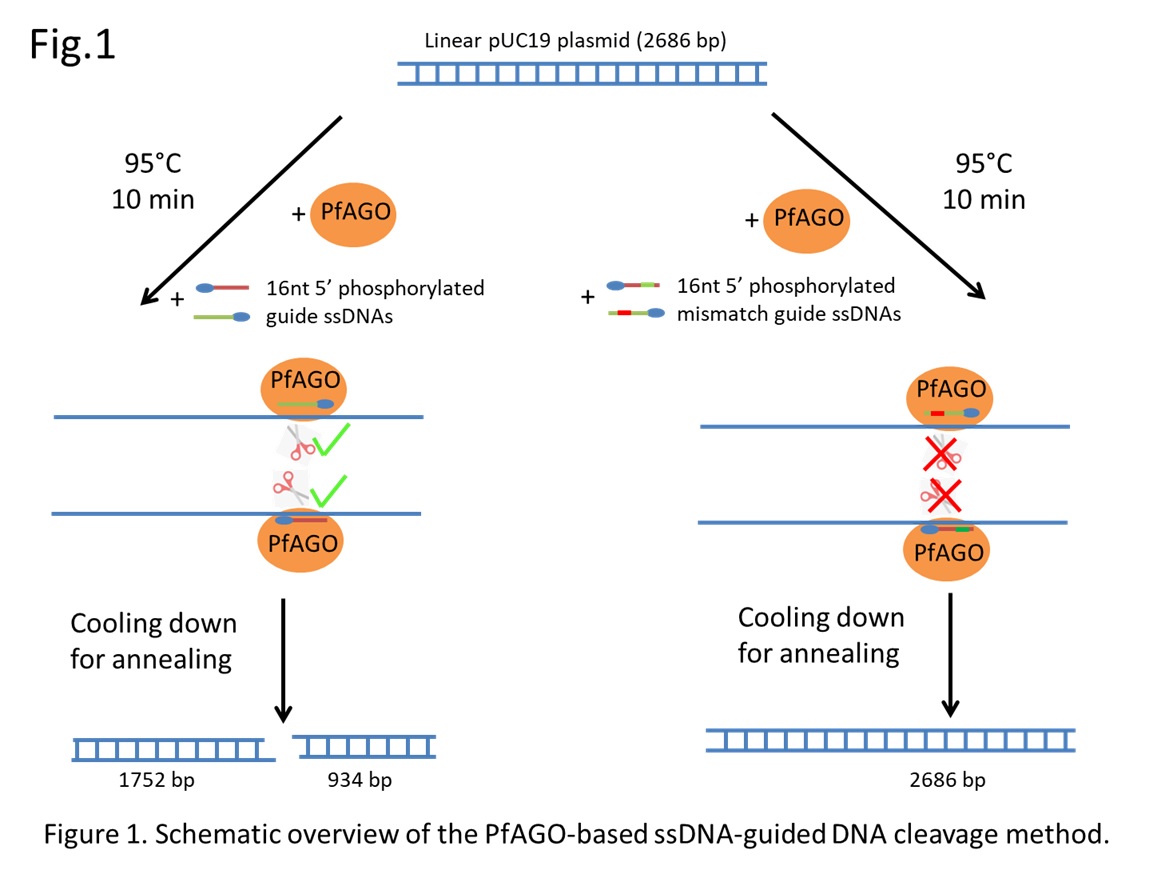
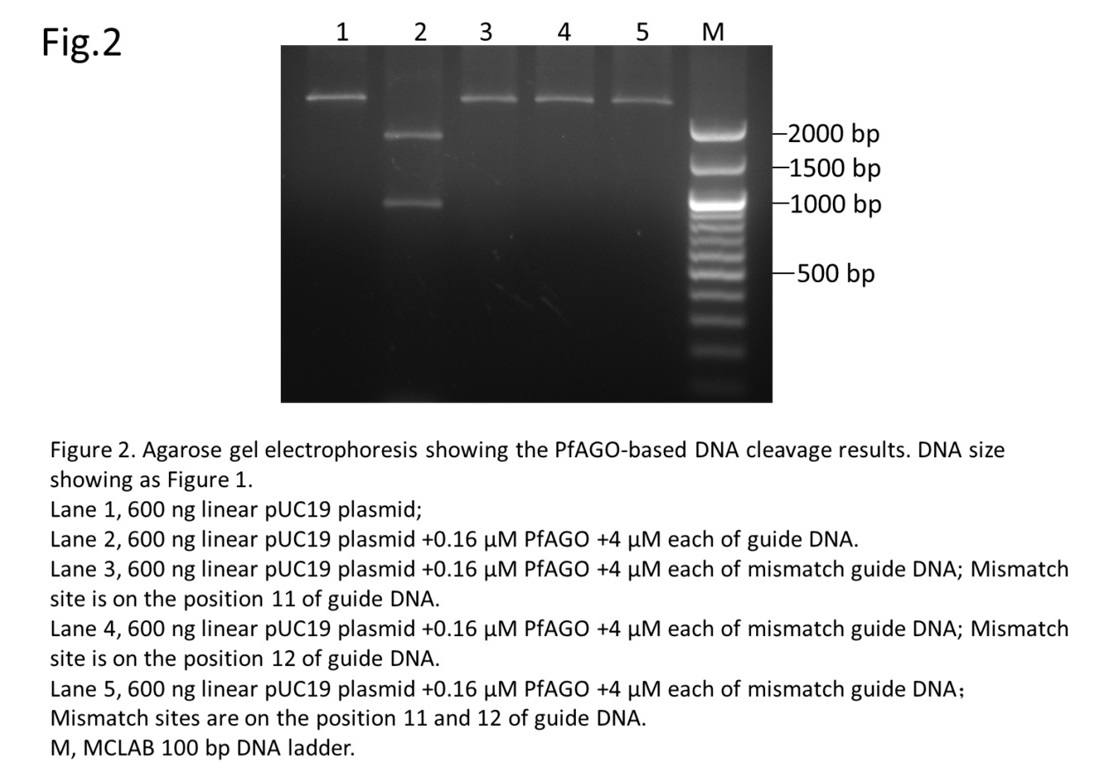
Figure 1 shows a schematic representation of DNA cleavage directed by ssDNA using PfAGO. The results of DNA cleavage using PfAGO are shown in Figure 2.
Application:
Storage:
-20 °C
Cas9 Nuclease, Streptococcus pyogenes, is an RNA-guided endonuclease that catalyzes site-specific cleavage of double stranded DNA.
Fast and simple fragmentation
Fragment size easily controlled by incubation time
Ideal for NGS library preparation
Benzonase endonuclease from Serratia marcescens, can be used to degrade all forms of DNA and RNA while having no proteolytic activity.
LE-100 5,000 units, 20,000 U/ml 120 €
LE-200 20,000 units 20,000 U/ml 361 €
|
|
|
|
Adaptive immune systems from prokaryotes utilize clustered regularly interspaced short palindromic
repeats (CRISPRs) and CRISPR associated (Cas) proteins to cleave foreign genetic material. Cas13a, (previously referred to as C2c2) is part of the Type VI CRISPR-Cas system.
Adaptive immune systems from prokaryotes utilize clustered regularly interspaced short palindromic repeats (CRISPRs) and CRISPR associated (Cas) proteins to cleave foreign genetic material. CasRx, Cas13d from Ruminococcus flavefaciens XPD3002, is highly active and short, 94KD.
PFS 5′-GAAAG-3′
Origin: Sulfuricurvum sp. PC08-66
Purity > 95%
Fast and simple fragmentation
Fragment size easily controlled by incubation time
Ideal for NGS library preparation