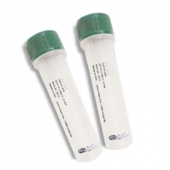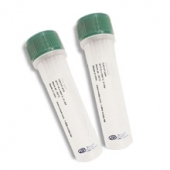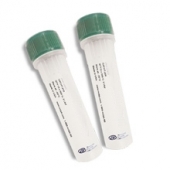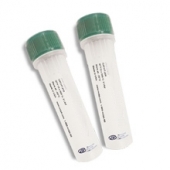

Bovine Enterokinase (rbEK)
Enterokinase (EK) is an enzyme produced by cells of the duodenum and involved in human digestion.

This website uses cookies We use cookies to personalise content and ads, provide social media features and analyse our traffic. We share information about how you use our website with our social media, advertising and analytics partners. Partners may combine this information with other information you provide to them or that they obtain as a result of your use of their services.
Active filters
Enterokinase (EK) is an enzyme produced by cells of the duodenum and involved in human digestion.
Human Trypsin 1, encoded by the PRSS1 gene, is also known as cationic trypsinogen. It contains a signal peptide (residues 1‑15), a pro region (residues 16‑23), and a mature chain (residues 24‑247).
The MutS DNA mismatch protein recognizes heteroduplex DNAs containing mispaired or unpaired bases.
Human Recombinant Alkyl Adenine DNA Glycosylase produced in E.Coli is a single, non-glycosylated polypeptide chain containing 306 amino acids (1-298 a.a.) and having a molecular mass of 33.9kDa (Molecular weight on SDS-PAGE will appear higher).
Endonuclease VIII from E. coli acts as both an N-glycosylase and an AP-lyase. The N-glycosylase activity releases damaged pyrimidines from double-stranded DNA, generating an apurinic (AP site).
Endonuclease V, (Endo V) is a 3'-endonuclease involved in DNA repair, which initiates removal of deaminated bases from damaged DNA, including uracil, hypoxanthine, and xanthine.
Endonuclease III (Nth) protein from E. coli acts as both N-glycosylase and a AP-lyase. The N-glycosylase activity releases damaged pyrimidines from double-stranded DNA, generating a basic (AP site).
RNase H is an endoribonuclease which degrades the RNA strand of RNA/DNA hybrid molecules.
RNase R is an E. coli exoribonuclease which exhibits 3' to 5' exonuclease activity, efficiently digesting nearly all linear RNA species. This enzyme does not digest circular, lariat, or double stranded RNA with short 3 overhangs (less than seven nucleotides).
Benzonase endonuclease from Serratia marcescens, can be used to degrade all forms of DNA and RNA while having no proteolytic activity.
Terminal deoxynucleotidyl transferase (TdT) is a template-independent DNA polymerase that catalyzes the addition of deoxynucleotides to the 3’ hydroxyl terminus of single or double stranded DNA molecules.
Adaptive immune systems from prokaryotes utilize clustered regularly interspaced short palindromic repeats (CRISPRs) and CRISPR associated (Cas) proteins to cleave foreign genetic material. CasRx, Cas13d from Ruminococcus flavefaciens XPD3002, is highly active and short, 94KD.
Adaptive immune systems from prokaryotes utilize clustered regularly interspaced short palindromic
repeats (CRISPRs) and CRISPR associated (Cas) proteins to cleave foreign genetic material. Cas13a, (previously referred to as C2c2) is part of the Type VI CRISPR-Cas system.
Adaptive immune systems from prokaryotes utilize clustered regularly interspaced short palindromic repeats (CRISPRs) and CRISPR associated (Cas) proteins to cleave foreign genetic material. Cas13a, (previously referred to as C2c2) is part of the Type VI CRISPR-Cas system.
Cas9 Nuclease, Streptococcus pyogenes, is an RNA-guided endonuclease that catalyzes site-specific cleavage of double stranded DNA.
check_circle
check_circle